How To Get More Sounds On Garageband Ipad
- Garageband For Ipad Manual
- How To Use Garageband On Mac
- How To Get More Sounds On Garageband Ipad 1
- How To Get More Sounds On Garageband Ipad Free
Use the Sound Library to download additional free instruments, loops and sound packs. Audio Unit Extensions in iOS 13 allow you to play, record and mix third-party instruments or effects right into GarageBand. And then share your song with friends and family. Make music like a DJ. Use Multi-Touch to tap. Mar 25, 2015 When you download GarageBand from the Mac App Store, you’ll immediately get 50 sounds, 500 loops, 1 drummer, and 2 basic lessons for guitar and piano. Likely, though, you want the full package, which is available as a free download that expands the content to 200 sounds, 2,000 loops.
Jul 27, 2016 How to use the noise gate in Garageband to remove background noise and hiss from audio and podcast recordings. Get More Brassy Broad How To’s, Behind the Scenes, and Musical Shenanigans https.
GarageBand 2.2 sees the return of Alchemy to iOS, and introduces a new Track Controls panel for adjusting various parameters.
Last year, Apple released GarageBand 2.1 a day before the start of the Winter NAMM show. Despite the ‘.1’ designation this update introduced a host of new functionality, such as Live Loops, Remix FX, Drummer, and support for Audio Unit Extensions. This year the company decided to follow the same pattern, releasing GarageBand 2.2 the day before Winter NAMM began (along with an updated Logic Control app, and a new version of Logic Pro X on Mac OS).
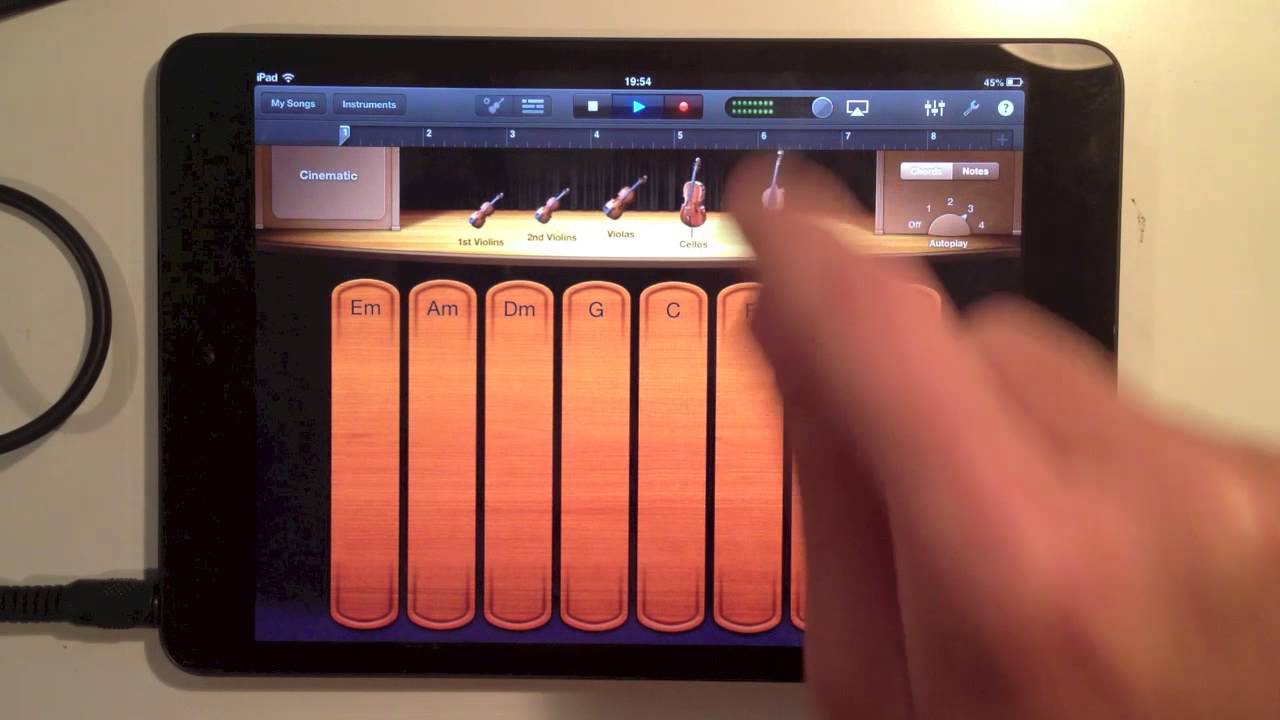
The first thing you’ll notice when you open the app is a redesigned sound browser. Rather than having one Touch or Smart Instrument per page as you swipe through the browser, Instruments are now organised into categories that occupy each page. For example, where previously there was a page each for the Keyboard, Smart Piano and Sampler Instruments, these are now found on the Keyboard page. Where relevant, a category includes a ‘More Sounds’ button that opens a pop-up browser for all the patches available within that category, making it easy to choose an Instrument with the desired sound ready to go.
In addition to redesigning the sound browser, Apple have also included a new Touch Instrument. When I last reviewed GarageBand I thought it was a shame it didn’t include Alchemy, since the iOS version of this synth disappeared from the App Store after Apple acquired Camel Audio, and it had already been incorporated into Logic Pro 10.2. So I was rather pleased to see the return of Alchemy to iOS with GarageBand 2.2, although it’s only available if you have an iPhone 6 or later, iPad Pro, iPad Air 2, or iPad Mini 4, which will no doubt disappoint users who previously ran the Alchemy app on older hardware.
Alchemy’s user interface is based on the Logic Pro X incarnation, and the GarageBand implementation offers the full Performance view from the plug-in. One feature retained from the original Alchemy app is the ability to modulate the Transform pad’s framing box by tilting your iOS device, and this can now be toggled with a handy button above the keyboard instead of delving into a menu. Sadly (if that’s a fair word to use) you only get “over 150 synth patches”, and there doesn’t seem to be a way to import additional content.
The Audio Recorder has been completely revamped in GarageBand 2.2 and now offers an output level control, the ability to toggle the monitoring of the signal (if you have headphones), and provides a selection of multi-effects. The effects are divided into two tabs: Fun and Studio. Fun provides the kind of effects that are the aural equivalent of the Photo Booth’s filters: Robot, Bullhorn, Chipmunk, and so on — the kind of effects no self-respecting reader of this magazine would ever use. But Studio offers more serious patches for specific recording situations. For example, say you’re recording vocals, there’s a number of patches in the Vocals folder such as Lead Vocals, which gives you control over pitch correction, compression, reverb, and other parameters. These are all real-time and can be adjusted after the recording.
A significant user interface addition is Track Controls, an inspector-like panel that appears on the left-hand side (shifting the display of existing content to the right), which replaces the old Song tab of the Settings pop-over. iPad users get a dedicated Track Controls button on the Control bar, while iPhone users will tap the Settings button and choose Track Controls. This panel is where you’ll access the familiar parameters for level, mute, solo, and effects, and there’s a Track Settings page for adjusting musical attributes. These include Quantise, Transposition, Velocity (if you have an iPhone with 3D Touch), and Recording, which is where you now access the Merge Recording setting and enable a new setting for Multi-Take Recording.
Multi-Take Recording is particularly nifty and is a global mode that applies to all Tracks in a Song, unless Merge Recordings is enabled on a given Track. As you might expect, it allows you to record material over the same range in the Song multiple times, with a number then appearing on the Region to indicate how many takes have been recorded. To select different takes, simply tap the selected region, choose Takes, and then select (or delete) the take you want to use. There’s no comping just yet!
Apple have added a few new effects to GarageBand, such as Bitcrusher and Overdrive, although a welcome addition — at least in terms of appearance — is Visual EQ, a simplified version of Logic Pro X’s Channel EQ. Where Channel EQ offers eight bands, GarageBand offers three — bass, mid, and treble — although it retains the FFT analyser.
Visual EQ comes to GarageBand, offering three bands and even a frequency analyser.
With the latest version of Logic Pro X (10.3), it’s now possible to share a Project to GarageBand For iOS via iCloud Drive. When you open the shared version in GarageBand you’ll notice it contains just one Audio Track containing a bounce of the Project, which makes sense given that GarageBand wouldn’t have the features to play back a full Project. But if you add Tracks and musical material to the Song in GarageBand, the next time you open the Logic version of the Project, you’ll be asked if you want to incorporate the latest changes from the shared Project. Pretty neat!
There are also many smaller features, such as Visual Count-in. When you press record, a red count-in overlay appears underneath the transport controls, highlighting the current beat of the count-in bar, and disappearing once recording begins. It’s a nice touch, although it can be disabled if you prefer. You can also now use the Smart Piano’s chord strip in any Keyboard Instrument by pressing the Chord Strips button next to the Arpeggiator. And finally, a new Note Pad feature (accessed via the Settings pop-over) lets you jot down your thoughts on a particular Song.
GarageBand For iOS continues to impress as it becomes more sophisticated; and while you likely won’t finish a full production with this app, it’s becoming an increasingly good sketchpad — especially with the increased Logic interoperability. Although there isn’t a single, ‘big new feature’ in version 2.2 compared with the introduction of Live Loops in 2.1 last year, this latest release has some really great features that should help to keep third-party developers on their toes.
£4.99
GarageBand for iOS is a great app for creating music, but what if you have a project in mind that requires specific sound effects? Unlike the Mac app, GarageBand for iOS has a limited range of built-in sounds, so this tutorial shows you how to grab what you need from free-to-download websites like freesound.org.
Download
First you will you need an app that lets you download assets (like audio files) from websites. There are plenty that do this as downloading stuff is a popular activity! One that I have stumbled across recently that makes this fairly easy is iDownloads Pro as it has a built-in browser and file manager, and it’s only $0.99!
In the browser of iDownloads, navigate to freesound.org, or your website of choice for downloading free-to-use audio files, and make sure you read the licence agreements carefully—no stealing please!
Freesound.org requires you to be logged in, but once you find a sound you want, tap the ‘Download’ button. Choose ‘Download’ from the pop-up menu.
As with all apps of this type the file will download into the File Manager of the app itself—if you have already created sub-folders this will make organization easier.
Locate your file in the File Manager section and tap the blue arrow next to its name.
Tap the ‘Open with’ button which will make the ‘Open in..’ dialog appear (yes I know, why isn’t the ‘Open with’ button labelled ‘Open in..’?) Currently GarageBand is lagging behind other audio apps like BossJock and Audio Mastering for iPad which directly support the ‘Open in..’ protocol (strange as Apple develop both iOS and GarageBand!) so you will need to choose an audio editor app like TwistedWave or Hokusai (with Tools pack) as an intermediate step. So ‘Open in..’ one of these apps.
Edit, Copy, Paste
In the audio editor app carry out any editing that is required. How to get more drum kits on garageband mac free.
Copy the audio file to the AudioCopy clipboard—this will enable you to paste it into GarageBand.
In GarageBand, create an audio track. This means choosing one of the two instruments that support audio files, the ‘Audio Recorder’ track or the Guitar Amp’ track. If you are starting a project from scratch you will need to ‘record’ something so a project is created and you can see the instrument as a track—then delete what you recorded.
Garageband For Ipad Manual
In Tracks view tap on the track background—a pop-up menu with the ‘Paste’ option will appear.
Skip to main content Skip to footer site9163 site0204049 New L10354 Ableton Live 10 Standard (Software Download) site9163 Guitar Center: Shop for. Downloadable ableton standard 10. Jan 10, 2019 Ableton Live 10 Standard Features: Powerful DAW designed from the ground up for the creative studio or performing musician Includes 1800+ sounds (10GB+), unlimited tracks and scenes, 5 software instruments, 42 effects, and 16 content Packs - Mac/PC VST, AU.
How To Use Garageband On Mac
How To Get More Sounds On Garageband Ipad 1
Paste the audio file from the AudioCopy clipboard into your project. GarageBand doesn’t have an audio file manager either (like Logic Pro’s Bin) so to use the sound effect in other projects you will need to copy and paste it from one to the other. It’s probably worth creating a project just for keeping sound effects in for this very reason!